
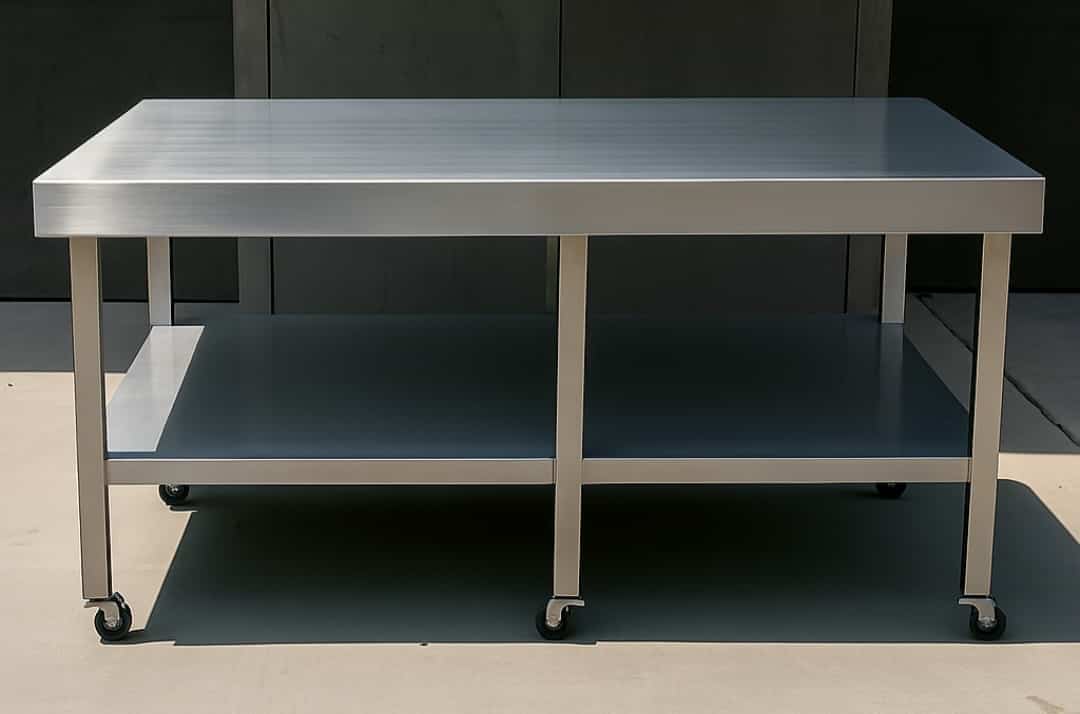
Custom stainless steel fabrication for food manufacturers, pharmaceutical companies, laboratories and industrial businesses across Sydney, the Northern Beaches, North Shore, Greater Sydney and across regional NSW. Including hygienic stainless steel equipment, process hoppers, benches, trolleys, enclosures, frames and custom components in 304 and 316 stainless steel.
Trusted by Leading Organisations
Mosman Council, UNSW, Commonwealth Bank, NSW Health, Australia Post and the Australian Department of Defence
Food-Grade, Medical & Pharmaceutical Stainless Steel Fabrication
One-off components, assemblies and repeat production runs for hygienic and demanding environments.
Food-Grade Stainless Steel Fabrication for Food Manufacturing
Hygienic food-grade stainless steel fabrication for food manufacturers, bakeries, beverage producers and processing facilities across Sydney and the Northern Beaches. Typical projects include production and wash benches, process hoppers, chutes, trays, custom enclosures and food manufacturing trolleys in 304 or 316 stainless steel.
Also, custom stainless steel benchtops for commercial kitchens, food processing facilities, laboratories and other hygienic work environments across the Northern Beaches and North Shore.
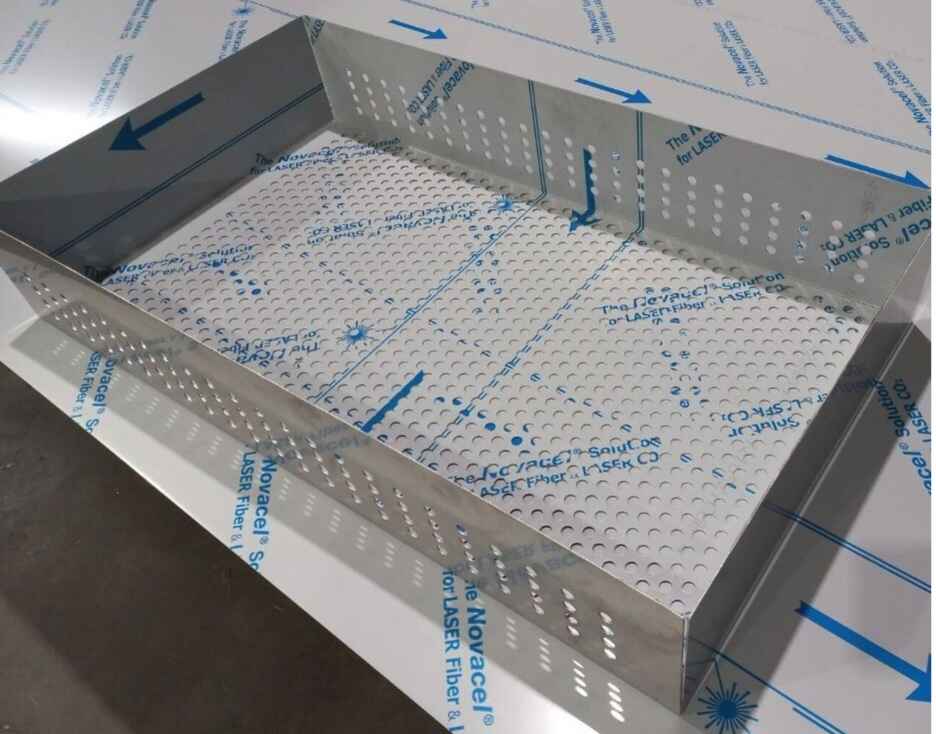
Pharmaceutical Stainless Steel Fabrication for Medical & Laboratory Environments
Custom pharmaceutical stainless steel fabrication for hospitals, laboratories, pharmaceutical facilities and healthcare environments. Typical projects include 304 and 316 stainless steel cabinets, workstations, laboratory benches, sterile storage, enclosures and medical & pharmaceutical stainless steel trolleys.
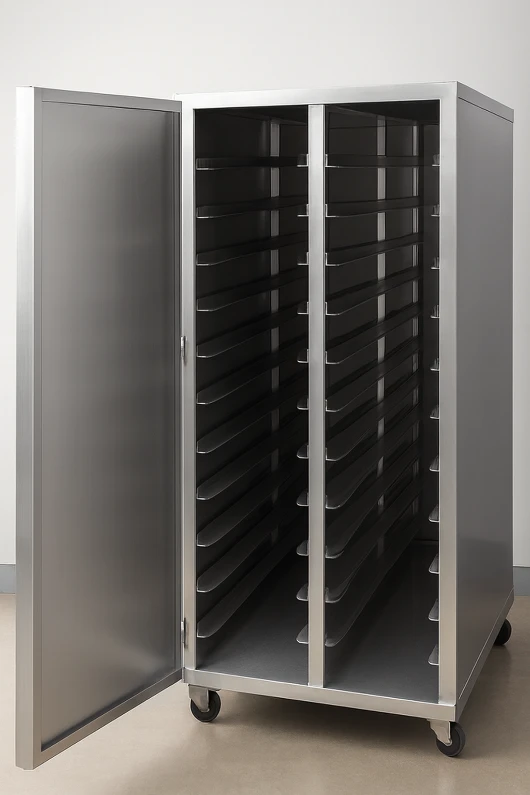
Custom Stainless Steel Trolleys
Custom stainless steel trolley fabrication is available for hygienic food manufacturing, medical, laboratory and pharmaceutical environments. See food manufacturing trolleys for production and wash-down applications, or medical & pharmaceutical stainless steel trolleys for hospitals, laboratories and controlled environments.
304 vs 316 Stainless Steel
Grade 304 stainless steel is widely used for food processing, medical and general equipment. Grade 316 stainless steel provides greater resistance to chlorides, chemicals and coastal exposure, making it suitable for demanding hygienic environments.
Stainless Steel Surface Finishes
- No. 4 (Brushed/Satin): suitable for food processing and hygienic equipment
- 2B (Mill Finish): smooth, economical finish for fabricated components
- Mirror Polish: high-gloss finish for medical, laboratory and architectural applications
- Electropolishing: improves corrosion resistance and cleanability for sterile environments
We also work with stainless steel frames, brackets and welded assemblies for transport infrastructure projects. See bus shelter installation services for related civil and transport work.
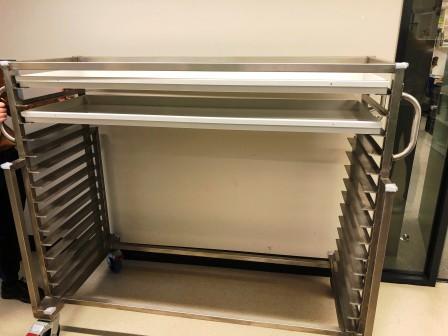
Recent Stainless Steel Projects
Recent stainless steel fabrication projects across Greater Sydney include:
- NSW Health: custom stainless steel medical trolleys for healthcare applications.
- Warriewood food manufacturer: food-grade benchtop fabricated for a production line.
- Mosman Council: 316 stainless steel fabrication for a coastal environment where resistance to salt-air corrosion was required.
What is the difference between 304 and 316 stainless steel?
Grade 304 stainless steel is widely used for food processing, medical and general equipment. Grade 316 contains molybdenum, providing greater resistance to chlorides, chemicals and coastal exposure.
What stainless steel finishes are available?
Common finishes include:
- No. 4 (Brushed/Satin): suitable for food processing and hygienic equipment.
- 2B (Mill Finish): smooth, economical finish for fabricated components.
- Mirror Polish: high-gloss finish for medical, laboratory and architectural applications.
- Electropolishing: improves corrosion resistance and cleanability for sterile environments.
What welding methods are used for stainless steel?
TIG welding is commonly used for stainless steel because it produces precise, clean welds with minimal heat distortion, making it suitable for food, medical and pharmaceutical applications.
What are the typical lead times for custom fabrication?
Lead times vary by project complexity. Small prototypes may be completed within 3–7 business days, while larger assemblies typically require 1–4 weeks.
What grades of stainless steel do you work with?
We work with 304 and 316 grade, with 316 used for medical, pharmaceutical, and food-grade applications requiring higher corrosion resistance. See the Stainless Steel Fabrication page for full material selection guidance.
Do you work with technical drawings or CAD files?
Yes. We work from technical drawings, CAD files and detailed measurements for accurate quoting and fabrication.
Why is stainless steel suitable for hygienic environments?
Stainless steel is well suited to hygienic environments because it is corrosion resistant, easy to clean and available in smooth finishes suitable for food processing, medical, laboratory and pharmaceutical applications.
Areas We Serve
Stainless steel fabrication and site installation across the Northern Beaches, North Shore and Greater Sydney, including Warriewood, Mona Vale, Brookvale, Manly, Balgowlah and Mosman.
AccuFab Solutions | Operating since 2006 | Sydney, NSW